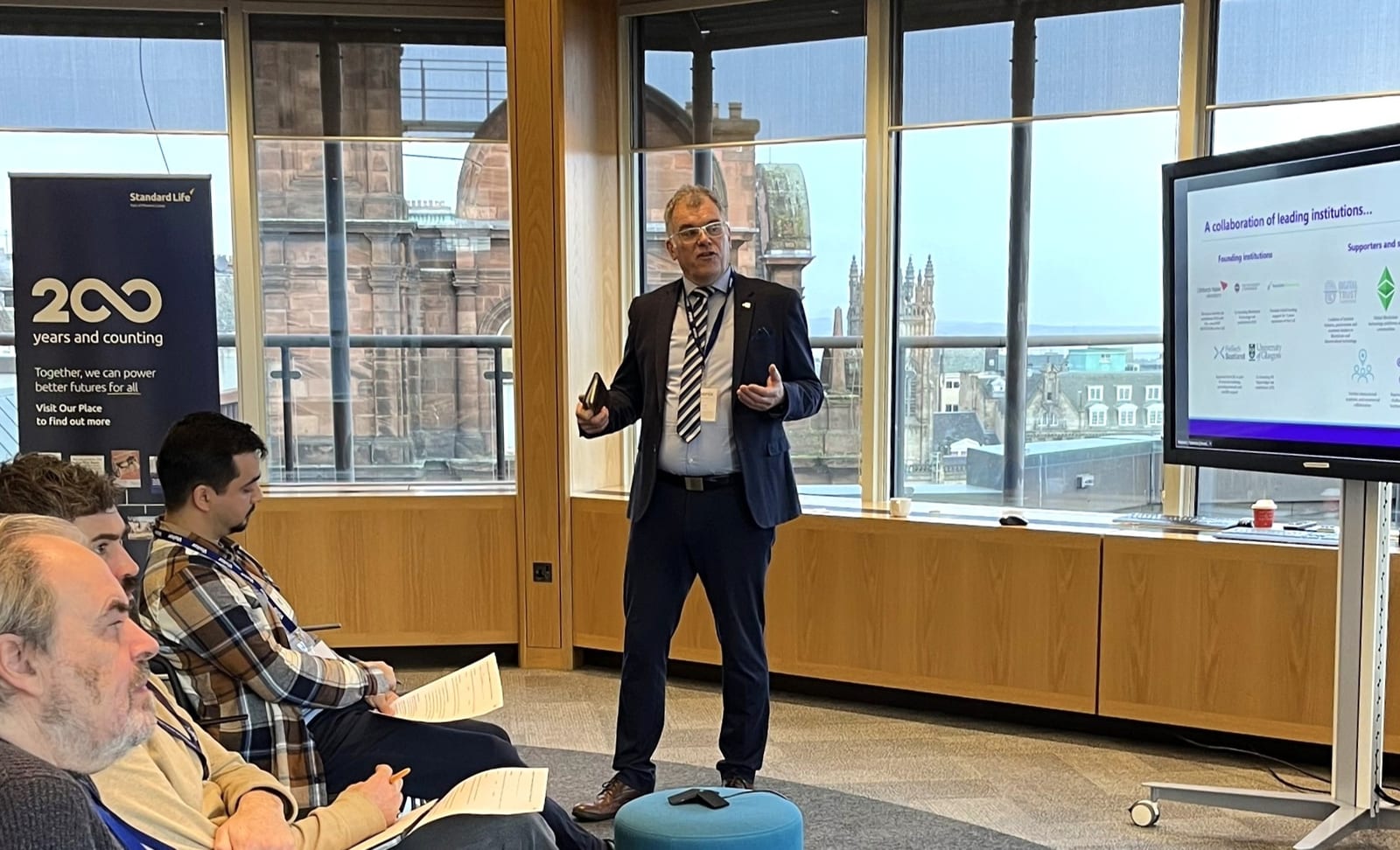




Scotland’s tech ecosystem has long been recognised for its strengths in data science and artificial intelligence, but one Edinburgh-based organisation is pushing the boundaries of what’s possible with financial data. Smart Data Foundry (SDF), established in 2022, is pioneering a new approach to unlocking the power of financial information for public good—and it’s positioning Scotland at the forefront of a global smart data revolution.
Beyond Traditional Data Repositories: The Smart Data Foundry Model
Smart Data Foundry represents a fundamental shift from traditional data repositories. Rather than simply storing information, SDF creates a secure, collaborative environment that enables the sharing and analysis of de-identified, synthetic, and open financial data specifically for research and innovation that benefits society.
The organisation’s mission is clear: to inspire research and policy that reduces poverty and inequality while improving economic wellbeing by making financial data accessible for the first time. This isn’t about commercial gain—it’s about leveraging data to tackle some of society’s most pressing challenges.
What sets SDF apart is its focus on ethical data use and privacy protection. All data is de-identified before analysis, and access is strictly controlled through robust governance frameworks that ensure research aligns with public good outcomes.
Edinburgh: Scotland’s Smart Data Capital

SDF’s location at the Edinburgh Futures Institute isn’t coincidental—it’s strategic. The organisation emerged from the University of Edinburgh’s Data-Driven Innovation programme, part of the £600 million City Region Deal that has transformed Edinburgh into a hub for data-driven innovation.
The Edinburgh Futures Institute, housed in the historic Old Royal Infirmary building, provides more than just office space. It offers an interdisciplinary ecosystem where data scientists, researchers, and industry partners collaborate seamlessly. This environment has proven crucial for SDF’s growth, with the organisation moving from the nearby Bayes Centre to the Futures Institute in 2024 following a period of sustained expansion.
Scotland’s broader fintech cluster, comprising over 220 thriving startups and established financial services providers, provides the perfect backdrop for SDF’s work. The country’s strength in data science, AI, and machine learning, combined with world-class universities and research institutions, creates an environment where innovative data solutions can flourish.
The Technology Behind the Innovation
SDF operates through a sophisticated Trusted Research Environment (TRE), supported by the Edinburgh Parallel Computing Centre (EPCC). This secure infrastructure enables the organisation to host micro-level, de-identified data while maintaining the highest standards of privacy and security.
The organisation works with three distinct types of data:
- De-identified private data: Real financial information from partner institutions, anonymised for research purposes
- Synthetic data: Generated through SDF’s Aizle platform, creating realistic financial behaviour simulations without using real data
- Open data: Curated datasets that support broader innovation and research initiatives
This multi-layered approach allows researchers and policymakers to access unprecedented insights while maintaining strict privacy protections.
Transformative Projects Delivering Real Impact
SDF’s portfolio of projects demonstrates the practical power of smart data applications. The organisation’s work spans from real-time economic monitoring to targeted policy interventions, each designed to address specific societal challenges.
Financial Data Service (FINDS)

In January 2025, SDF secured £3 million in funding from Smart Data Research UK (UKRI) to operate the new Financial Data Service. FINDS provides researchers with secure access to de-identified banking and financial data from millions of UK households and businesses, positioning the UK at the forefront of smart data research.
The service forms part of a national network of six data services, enabling researchers to study financial behaviours, economic resilience, and regional economic activity with unprecedented detail. This infrastructure represents a fundamental shift in how economic research is conducted, moving from survey-based methodologies to real-time data analysis.
Economic Intelligence Tools
SDF has developed two groundbreaking tools that provide near-real-time insights into the UK’s economic health:
Economic Nowcast: A first-of-its-kind initiative providing real-time insights into economic wellbeing and small business productivity, freely available on SDF’s website.
Economic Wellbeing Explorer: An interactive, map-based tool offering detailed economic insights at national, regional, and local levels, available to authorised users through the MyFoundry platform.
Small Business Intelligence
The Quarterly Small Business Tracker, developed in partnership with Sage and CEBR, analyses anonymised data from over 130,000 UK SMEs. Recent findings show the resilience of small businesses, with Q1 2025 data revealing profit growth and regional gains despite challenging economic conditions.
| Metric | Q1 2025 Performance |
|---|---|
| Revenue Growth | 3.5% YoY |
| Profitability | +8.3% |
| Productivity | -1.8% |
| Cash Balances | +3.7% |
| Debt Levels | -9.1% |
Local Government Innovation
SDF’s Cost-of-Living Dashboard, developed with East Renfrewshire Council, demonstrates how smart data can support local government decision-making. Using near real-time de-identified banking data from NatWest, the dashboard integrates financial wellbeing indicators with contextual information, helping councils identify hidden deprivation and target support more effectively.
Accelerating Scotland’s Tech Ecosystem
SDF’s impact extends far beyond individual projects. The organisation is accelerating product and service development across Scotland’s tech ecosystem by providing access to high-quality, research-ready data that would otherwise be impossible to obtain.
For fintech companies, SDF offers opportunities to test and refine products using synthetic data generated through the Aizle platform. This approach enables innovation without the privacy and regulatory concerns associated with real financial data.
Academic researchers benefit from unprecedented access to financial datasets, enabling studies that were previously impossible due to data availability constraints. This has opened new research avenues in areas ranging from financial inclusion to economic policy effectiveness.
Public sector organisations can leverage SDF’s insights to design more targeted interventions. The success of the East Renfrewshire Council partnership demonstrates how local authorities can use smart data to identify vulnerable populations and measure the effectiveness of support programmes.
Navigating Challenges and Ethical Considerations
Operating at the intersection of financial data and public policy requires careful navigation of complex ethical and regulatory landscapes. SDF addresses these challenges through several key approaches:
Privacy Protection: All data is de-identified before analysis, with strict access controls ensuring only authorised researchers can access datasets.
Ethical Governance: Research projects must align with public good outcomes and undergo rigorous ethical review processes.
Regulatory Compliance: SDF works closely with bodies including the Financial Conduct Authority (FCA) and Information Commissioner’s Office (ICO) to ensure compliance with evolving regulatory frameworks.
Transparency: The organisation maintains open communication about its methods, partnerships, and findings, building public trust in smart data applications.
The Future of Smart Data Innovation
SDF’s trajectory points toward an increasingly sophisticated and impactful smart data ecosystem. Several trends are shaping the organisation’s future direction:
Real-time Economic Intelligence: The Economic Nowcast and Economic Wellbeing Explorer represent the beginning of a shift toward continuous economic monitoring, enabling more responsive policy interventions.
Synthetic Data Expansion: The Aizle platform’s success suggests growing demand for synthetic data solutions that enable innovation without privacy concerns.
Cross-sector Collaboration: SDF’s partnerships demonstrate the power of bringing together financial institutions, government bodies, and research organisations around shared objectives.
International Recognition: Scotland’s leadership in responsible smart data innovation is attracting international attention, with potential for expanded collaboration and knowledge sharing.
Conclusion: A Model for Responsible Innovation
Smart Data Foundry represents more than just a successful Scottish tech story—it’s a blueprint for how organisations can harness the power of financial data while maintaining the highest standards of privacy, ethics, and public benefit. By demonstrating that commercial success and social good are not mutually exclusive, SDF is paving the way for a new generation of data-driven innovations.
For Scotland’s tech ecosystem, SDF’s success reinforces the country’s position as a global leader in responsible data innovation. The organisation’s growth from university spin-out to national infrastructure provider demonstrates the potential for Scottish institutions to scale solutions that address both local and global challenges.
As the smart data revolution continues to evolve, Smart Data Foundry’s Edinburgh base positions Scotland at the centre of developments that will shape how societies understand and respond to economic challenges. The organisation’s commitment to public good, combined with its technical excellence and collaborative approach, offers a compelling vision for the future of data-driven policy and innovation.
The next phase of SDF’s development will likely see expanded international partnerships, deeper integration with government policy processes, and continued innovation in synthetic data applications. For Scotland’s tech sector, this represents not just economic opportunity, but a chance to lead global conversations about responsible data use and social impact.