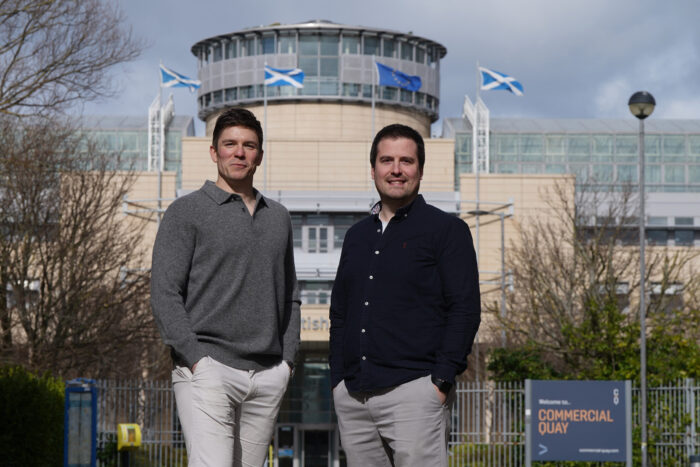



A few short months after being named Scotland’s fastest-growing private company, Edinburgh-based fintech Loveelectric has agreed to be acquired by Perkbox, one of the UK’s largest employee benefits platforms — a deal that takes a Scottish-built salary sacrifice business into a buyer with access to nearly four million UK employees.
The agreement, announced on 11 December 2025, brings Loveelectric’s electric vehicle salary sacrifice technology and its Visa-integrated EV Charge Card into Perkbox’s unified employee experience platform, which launched in September 2025. Terms of the transaction were not disclosed.
A Scottish-built platform with national reach
Loveelectric was founded in 2021 and now supports more than 1,500 employers and over 125,000 employees across the UK, according to the deal announcement from Perkbox. The company sits at the intersection of fintech and the energy transition: its core product is a salary sacrifice scheme that lets employees lease a new or used electric vehicle through their employer, with the lease cost deducted from gross pay, alongside a Visa-integrated payment card and driver app for public and workplace charging.
The business has accumulated a stack of recognition in 2025. It was named Scottish Fintech of the Year, ranked Scotland’s single fastest-growing private company in the UK Fast Growth Index 2025, and named Best Salary Sacrifice Broker at the Broker News Awards 2025. It is also B Corp certified and carbon-neutral accredited.
For a Scottish technology business that did not exist five years ago, that is an unusually fast trajectory to an exit at this scale.
What the buyer gets
Perkbox employs the language of a strategic combination rather than a pure scale acquisition. The buyer’s stated rationale is to add a specialist EV benefit to its unified platform, which spans wellbeing, rewards, recognition and benefits administration for what the company says is nearly four million employees at more than 7,500 organisations worldwide, including more than 80% of the NHS.
The strategic logic rests on two trends. The first is UK government policy: the most recent Budget confirmed continued support for EV salary sacrifice, with the cap on salary sacrifice for EVs remaining uncapped — a tax treatment that has underpinned the entire UK market — alongside £1.5 billion of further EV sector investment. The second is the structural growth of the employee benefits market itself, where unified platforms have been consolidating point solutions rather than building them.
Doug Butler, CEO of Perkbox, said in the announcement: “I am thrilled to welcome loveelectric to Perkbox and equally excited to add its impactful offerings to our unified platform. Steve and team have grown loveelectric into a formidable business providing meaningful benefits to employees and the environment, and I know that their innovative and passionate culture will greatly contribute to Perkbox’s own mission to ensure that Every Employee is Valued.”
The founder’s read
Steve Tigar, founder and CEO of Loveelectric, framed the deal as an acceleration platform rather than an endpoint: “I’ve long admired Perkbox, and I am thrilled that loveelectric will now join a company whose mission and purpose align so closely with our own. With access to over four million employees across the UK, Perkbox is the perfect partner for our next phase of growth. With Perkbox, we can dramatically accelerate the adoption of electric cars by helping businesses offer a benefit that is both financially compelling and environmentally meaningful.”
That framing matters. UK fintech exits in 2024–25 have skewed heavily towards distressed sales, secondaries, or stake-acquisitions at flat or down valuations. A growth-stage Scottish fintech going to a strategic UK buyer with a stated integration roadmap is a different kind of outcome.
The wider read for Scottish tech
The deal lands at a moment when Scottish high-growth statistics look strong on paper but require careful reading. Scottish Government data published in December 2025 showed the number of high-growth businesses by turnover almost doubled in a single year, from 2,685 in March 2024 to 5,490 in March 2025 — though the Government’s own commentary attributes the spike “largely [to] the starting point for the growth calculation being turnover from 2020”, when COVID-19 trading restrictions suppressed many businesses’ base-year revenue. The employment-growth measure of high-growth firms actually edged down from 870 to 840 over the same window.
Loveelectric is the kind of company that survives that statistical caveat. It scaled organically, on a product that solved a specific structural problem in the UK benefits and EV markets, and it exited to a larger UK platform that wanted what it had built. For Scottish fintech operators watching the funding and exit environment, that is a more useful data point than an aggregate turnover figure.
The next thing to watch is integration. Perkbox has not yet detailed how Loveelectric will sit inside the unified platform, whether the brand will be retained, or how the Charge Card product will be positioned to Perkbox’s existing customer base. The answers to those questions will shape whether this deal looks, in retrospect, like a strategic combination or a soft landing.