


By Anne Beau-Lyon
As news emerges that SaxaVord Spaceport has recorded a pre-tax loss of £5.4 million for 2024 — up from £5.1 million the previous year — it would be easy to reach for the wrong conclusion. Scotland’s only licensed vertical launch facility is losing money. A Scottish rocket company has just collapsed into administration. The story, on the surface, looks troubled.
Look closer, and a more instructive picture emerges — one that says less about the health of Scotland’s space sector and more about the fundamental difference between a business with the foundations to absorb investment and one that runs out of road before it can reach the launchpad.
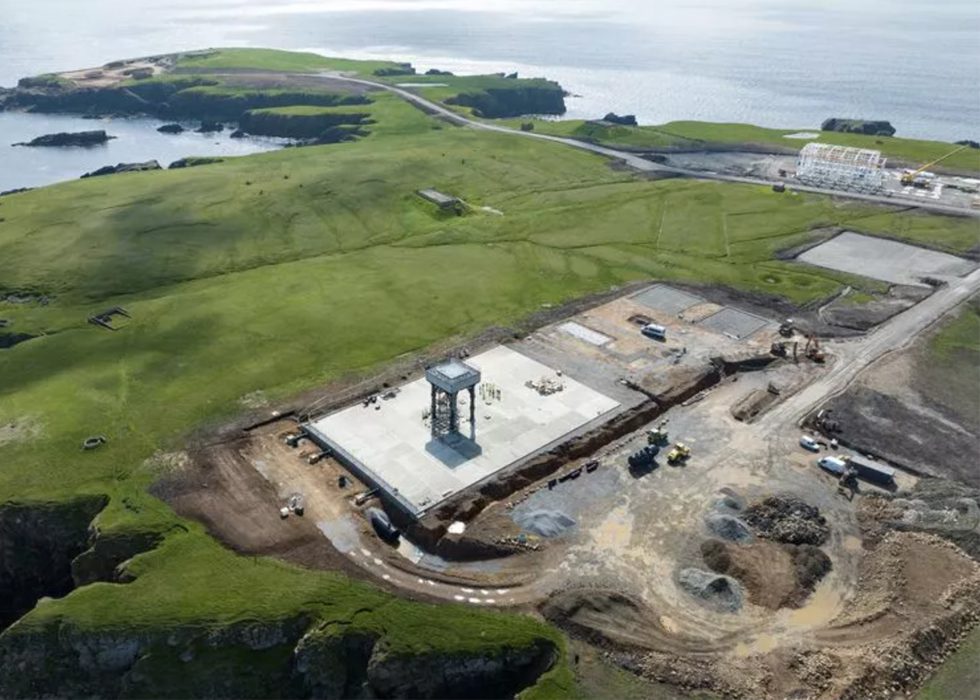
SaxaVord’s £5.4 million loss is the entirely predictable cost of building complex, capital-intensive launch infrastructure from scratch on a remote Scottish island. Revenue is moving in the right direction — up 32% to £2.5 million in 2024 — and the directors have described the business as firmly in its development phase, with the financial trajectory they expected. RFA ONE, SaxaVord’s first confirmed launch customer, has already delivered its rocket stages to Unst ahead of a summer 2026 test launch. Further customers are in the pipeline — each navigating their own formidable path through the engineering, regulatory and capital demands of bringing a new launch vehicle to market, and each representing a future revenue stream that SaxaVord is positioning itself to serve. The path from here to commercial viability is capital-hungry, but it is visible and it is being walked.
SaxaVord has the substantial private backing to stay the course — its investors, who include Danish billionaire and Scotland’s largest private landowner Anders Holch Povlsen, have demonstrated the patience and financial depth to carry a development-stage space business through to the launch revenue it needs. It is also reasonable to observe that had SaxaVord received anything close to the level of political and financial support from the Scottish Government that was directed towards Sutherland and Orbex — reported at over £26 million in taxpayer-backed loans alone — it would almost certainly be considerably further down the path to commercial success today. That is not a trivial point. It is a question about strategic choices, institutional priorities, and who ultimately carries the cost when those choices prove wrong.
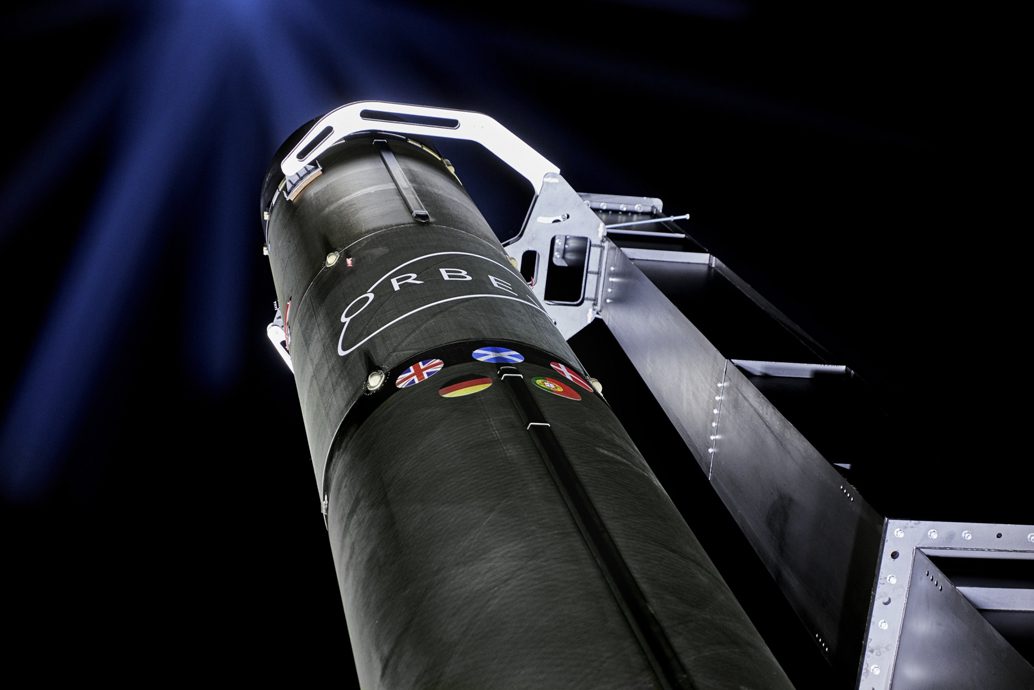
That distinction matters enormously when set against the story of Orbex — the Forres-based rocket startup backed by £26 million in taxpayer loans that was supposed to be Scotland’s sovereign moment in space.
In February 2026, Orbex appointed administrators. The rocket never flew.
The collapse is not simply a business story. It is a pointed question about the gap between Scotland’s space ambitions and the industrial and financial infrastructure needed to actually deliver them — and a moment that deserves honest examination rather than quiet embarrassment.
Orbex had genuine technical credibility. Its Prime rocket was designed from the ground up as a small orbital launch vehicle, using a 3D-printed engine and bio-propane fuel in a design that attracted serious attention from the global launch community. The company raised substantial funding, spent years working through the complex regulatory and engineering process required to reach the launch pad, and ultimately made one significant strategic decision that suggested it still believed in its own future.
In October 2024, Orbex abandoned its original launch site at Sutherland — the publicly backed facility developed through Highlands and Islands Enterprise — and moved all its launch operations to SaxaVord. The late Frank Strang, SaxaVord’s founder, welcomed the move warmly, saying: “We’re delighted to welcome Orbex to SaxaVord. Given the scale of their ambition and the evolution of their offer to include a medium-sized launch vehicle, it makes sense for Orbex to start operations from SaxaVord Spaceport, which is already licenced and in a position to support their upcoming launches.” Orbex CEO Phil Chambers called it “a win-win for UK and Scottish space.”
That the company had already recognised SaxaVord as the right place to launch from — and still ran out of road before getting a single rocket off the ground from either location — makes the collapse all the more instructive.
What Orbex could not secure was a path to commercial viability. It had no equivalent of patient, deep-pocketed private capital willing to absorb sustained losses through a protracted development phase. Instead it had government-backed loans, a burning cash pile, and no launch revenue to offset either. The company was reported to be “on the brink of collapse” even as £26 million in taxpayer loans remained outstanding — a detail that drew uncomfortable scrutiny of how public money had been deployed in one of the most technically demanding and capital-intensive sectors in the world.
The contrast with SaxaVord is sharp and instructive. Both businesses have posted substantial losses. Both have faced the enormous challenge of building space infrastructure in remote Scotland. But one has substantial private backing, a confirmed launch customer, rocket hardware on site, and a credible commercial runway ahead. The other ran out of capital before it could prove itself. The difference was never really about the technology or even the ambition — it was about the nature and depth of the financial backing behind them.
There are broader lessons here that Scotland’s space sector and its supporters in government need to absorb rather than sidestep. Building a commercially viable rocket business — one with paying customers, reliable launch cadence and a sustainable cost structure — is extraordinarily hard. Several well-funded European launch startups have discovered the same brutal truth in recent years, and Orbex is not alone in finding that the gap between a working rocket and a working business model is where ambitions go to die.
The lesson about public support is equally pointed. Government backing matters in capital-intensive industries, but loans are not the same as patient, strategic investment. Orbex needed anchor customers, procurement commitments, and the kind of long-term institutional confidence that turns a promising startup into a durable industrial asset. That ecosystem does not yet exist in Scotland at the scale the space sector requires.
None of this means Scotland’s launch ambitions are finished. SaxaVord remains operational and licensed. Other Scottish space companies, from Alba Orbital in Glasgow to Skyrora, continue to develop their capabilities.
But Orbex deserves to be remembered honestly — as a company of genuine ambition that fell short, and as a warning that Scotland’s next chapter in space will require not just vision, but the commercial rigour, patient capital and strategic coordination to back it up.
The rocket never flew. Scotland cannot afford for that lesson to go unlearned — and perhaps the most pointed lesson of all is for the Scottish Government itself, which might reasonably reflect that investing public money in rocket technology demands rather more forensic scrutiny than it has historically applied to buying ferries. A procurement process that turned a £97 million ferry contract into a £300 million bailout disaster inflicted serious and lasting damage on the Scottish public purse — and on the credibility of government as a serious partner in complex industrial endeavours.
Government and business risk are uneasy partners at the best of times. Public money can provide the strategic impetus that private capital alone cannot — but the responsibility to spend it wisely, on the right ventures, with honest assessment of the odds, is not a light one. Scotland has learned that lesson before. The hope is that this time, it sticks.