
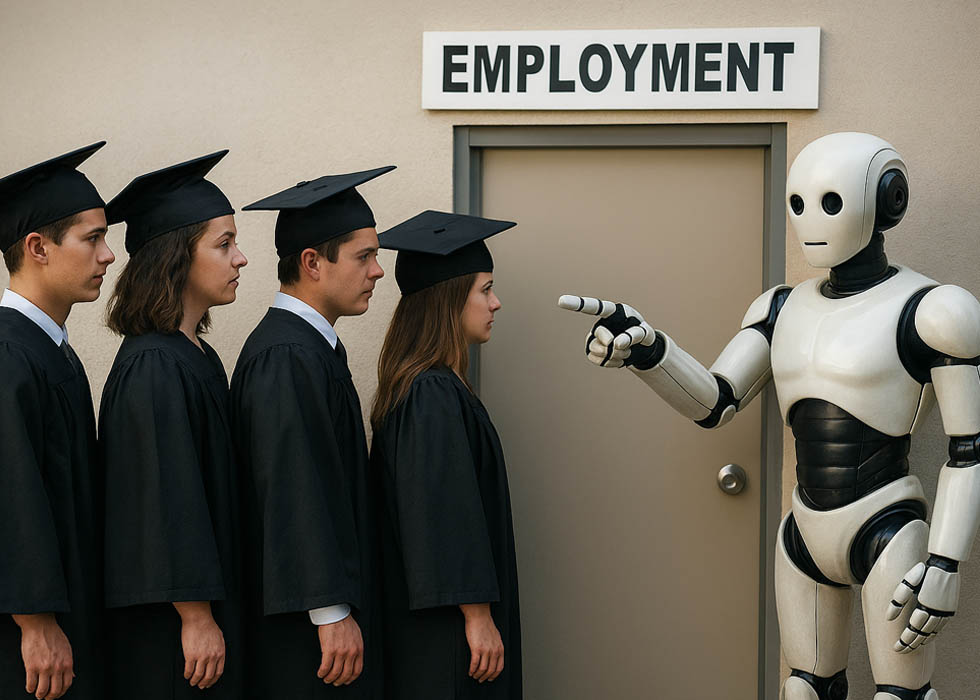


UK businesses have increased the number of proposed mass dismissal programmes by five per cent over the past year, as companies restructure ahead of the upcoming Employment Rights Bill and the growing adoption of AI.
According to data from law firm TWM Solicitors, the number of mass dismissal programmes rose to 3,715 in 2024 to 2025 up from 3,456 in the previous year, representing a total of 267,800 proposed job cuts.
The public administration, health and education sectors recorded the sharpest proportional increase, with notified proposals rising by 19 per cent, while the manufacturing sector saw a 12 per cent rise, reaching 630 programmes over the year.
The Employment Rights Bill which had been expected to pass this month, is currently stalled between the House of Commons and House of Lords over ‘day one’ employment rights, with the Lords favouring a six-month threshold instead of immediate eligibility.
Anthony Wilcox, Partner at TWM Solicitors said: “Under the new legislation… some redundancy exercises are going to become more complex.”
“Apart from the additional management cost and time faced by employers, the cost of getting a programme of contract changes or redundancies wrong under the new law will be substantial, so it is logical for employers to move forward with envisaged contract changes or redundancy programmes.”
The findings come as many organisations accelerate workforce changes, integrating AI systems that enable smaller teams to maintain or even improve productivity.
Responding to the news, Sheila Flavell CBE, COO, FDM Group said: “As AI adoption accelerates across industries, organisations must ensure their workforce has the skills to work effectively alongside these technologies. Our research highlights that over half (54 per cent) of organisations now say AI skills will be required in all early-career roles, however, only 6 per cent of teams currently have high AI proficiency.”
“This gap underscores the urgent need for upskilling both existing staff and graduates entering the workforce. AI is not a replacement for human expertise, it amplifies it. By embedding practical AI training into professional development, organisations can equip employees to critically assess, guide, and collaborate with AI tools, rather than outsourcing thinking to technology.”