


Scotland has one of the UK’s most geographically demanding freight landscapes — long Highland corridors, island supply chains, and urban distribution in its two major cities. That makes the latest announcement from Volvo Trucks particularly relevant for Scottish logistics operators: a new generation of electric heavy-duty trucks with ranges of up to 700 km and charging times designed to fit within a standard driver rest break.
The Engineering Breakthrough
The headline innovation is the FH Aero Electric with extended range, and the key to its 700 km capability is a newly developed e-axle — a compact unit that integrates two electric motors and a six-speed gearbox directly into the rear axle. By consolidating those drivetrain components, Volvo frees up chassis space for eight batteries, dramatically increasing onboard energy without sacrificing payload. The truck can carry up to 28 tonnes with a gross combination weight of 48 tonnes.
Critically, the truck is compatible with the new MCS (Megawatt Charging System) standard, delivering 700 kW of charging power — enough to bring the battery from 20% to 80% in around 50 minutes. That fits neatly within the EU-mandated 45-minute driver rest requirement, meaning no productivity penalty versus diesel on long-haul routes. A 350 kW CCS fallback option extends that charge time to around 85 minutes for sites not yet MCS-equipped — relevant for Scottish operators where charging infrastructure outside the Central Belt remains patchy.
Roger Alm, President of Volvo Trucks, says the company has deliberately designed to eliminate the traditional objections to going electric: “This long-haul electric truck is the best in the industry. It offers an outstanding range in combination with high payload, fast charging and great riding comfort. With this truck, our customers can drive the really long distances and throughout an entire working day with the same productivity as diesel trucks.”
What It Means for Scottish Operators
Volvo is no fringe player in Scottish freight. The brand’s Volvo Truck and Bus Centre North & Scotland franchise operates from seven Scottish depots — Aberdeen, Ayr, Edinburgh, Glasgow East, Glasgow West, Inverness and Perth — giving it one of the densest service footprints of any truck brand in the country. Nationally, Volvo holds approximately 14.5% of the UK heavy truck market, placing it among the top two brands in the UK, and in 2024 the UK was the company’s single largest European market by registrations.
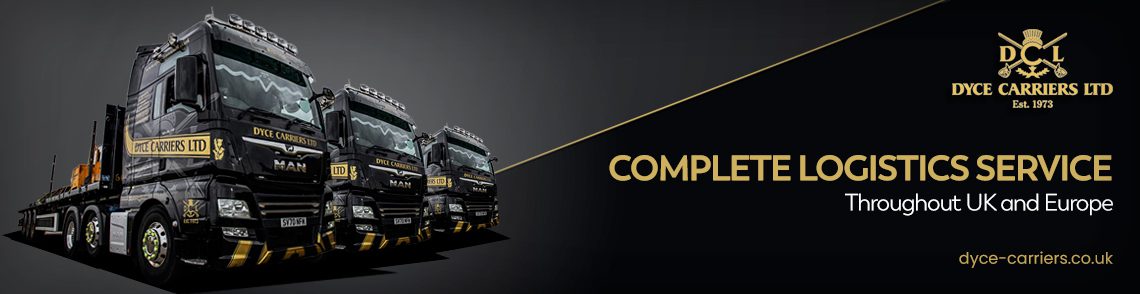
Speaking to Silicon Scotland, one operator well placed to assess the real-world implications is Aberdeen-based Dyce Carriers, one of the north-east’s most established haulage companies. Founded in 1973, the firm has grown into a national road transport business with over 100 employees and depots stretching from Aberdeen to the Central Belt — with Volvo trucks making up around 80% of its fleet.
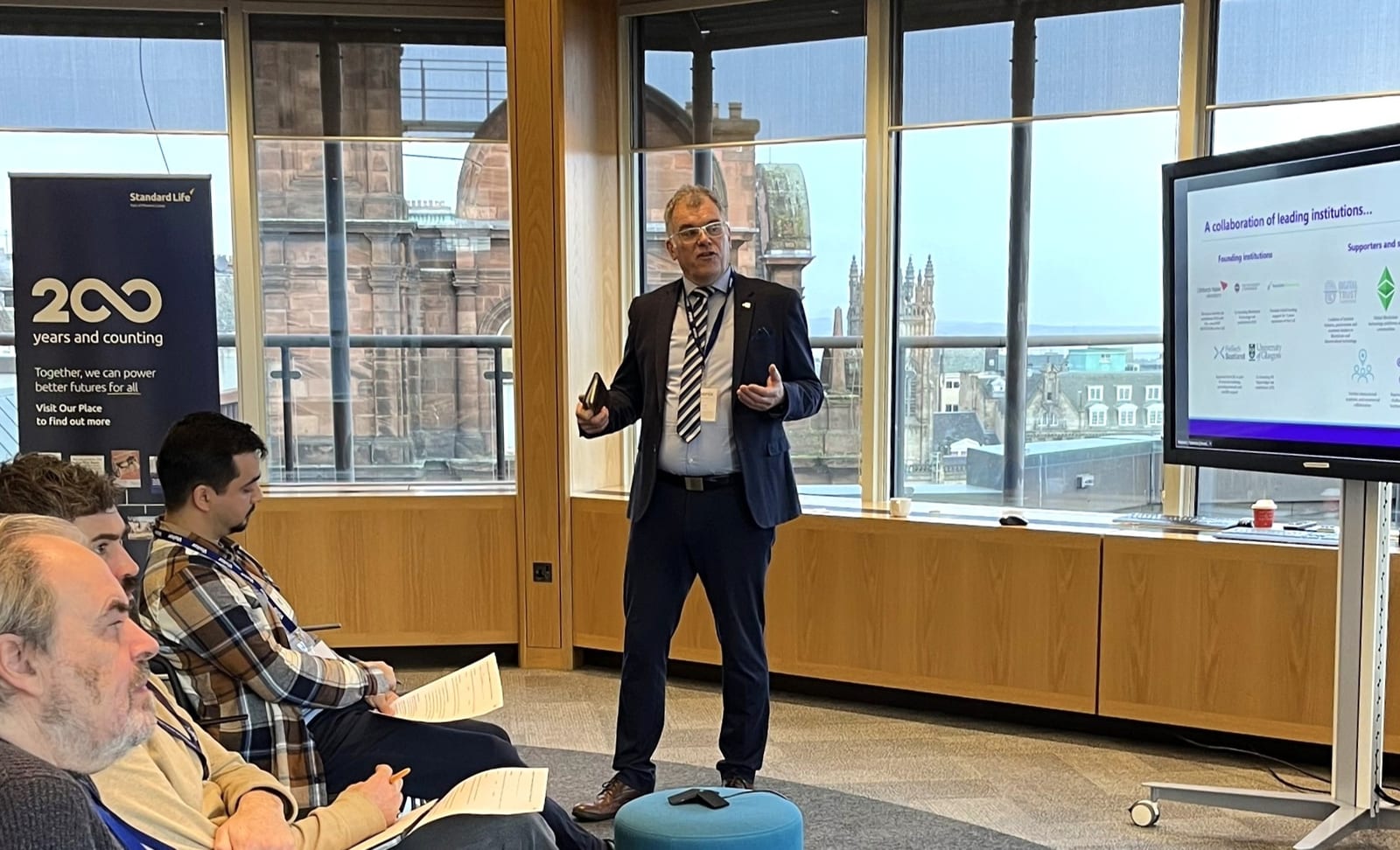
Managing Director Jason Moir told Davide Baptiste at Silicon Scotland that he welcomed the progress being made in the EV truck market, but felt that for it to become a truly viable option, the infrastructure needs to be in place before hauliers across the country can confidently commit to making the switch away from diesel. He also pointed out that the disparity between the support given to the bus sector compared to road haulage was startling. “I hope we will see the same support to help us move to a more sustainable future,” he said.
Next-Gen Versatility for Scottish Industry
Beyond long-haul, the new FH, FM and FMX Electric trucks — with ranges up to 470 km and a new dual-motor drivetrain producing up to 540 kW (731 hp) — are built for exactly the kind of mixed-use, demanding applications common in Scottish industry: construction, utilities, refuse collection and heavy distribution. A standout feature is an integrated gearbox power take-off (PTO), which allows the truck to simultaneously power auxiliary equipment — concrete mixers, hook lifts, tipper bodies — while in motion, without additional motors. For Scottish construction and utilities firms, that removes a longstanding practical barrier to electrification.
All new trucks also feature powershift gearboxes — eight-speed on the FH/FM/FMX Electric, six-speed on the FH Aero — delivering seamless gear changes with reduced noise and vibration. Volvo’s approach addresses the specific challenges of Scotland’s hilly terrain far more directly than simpler single-speed EV architectures.
Alm is confident this generation marks a turning point: “We’re really sharpening our offering here. We are broadening it and making electric solutions possible for an even wider range of transport assignments. It has never been easier to replace diesel trucks with electric ones.”
The Infrastructure Question
Moir’s challenge to policymakers cuts to the heart of the issue. The 700 km range and 50-minute MCS charging are compelling on paper, but without a step-change in charging infrastructure — particularly along the A9 corridor and across the Highlands — and without parity in government support between road haulage and other transport sectors, the economics of switching remain challenging for many Scottish operators. Volvo’s fallback CCS compatibility offers a pragmatic bridge, but it is not a substitute for a coherent national strategy.
Volvo frames this launch within a broader net-zero by 2040 strategy, using a three-pathway approach: battery electric, hydrogen fuel cell, and combustion engines running on renewable fuels including green hydrogen, biogas, biodiesel and HVO. The new electric trucks begin rolling out to markets from 2026.