


A pioneering satellite using innovative Scottish-built sensors is revolutionising weather forecasting across Europe, with new data showing the Glasgow-developed technology is delivering forecast improvements that match those from much larger, traditional weather satellites.
The Arctic Weather Satellite (AWS), developed by the European Space Agency in partnership with Glasgow satellite engineering firm AAC Clyde Space, has exceeded performance expectations since becoming operational in July 2025. The European Centre for Medium-Range Weather Forecasts (ECMWF) became the first organisation to operationally assimilate data from the compact satellite, marking a significant milestone for Scottish space technology.
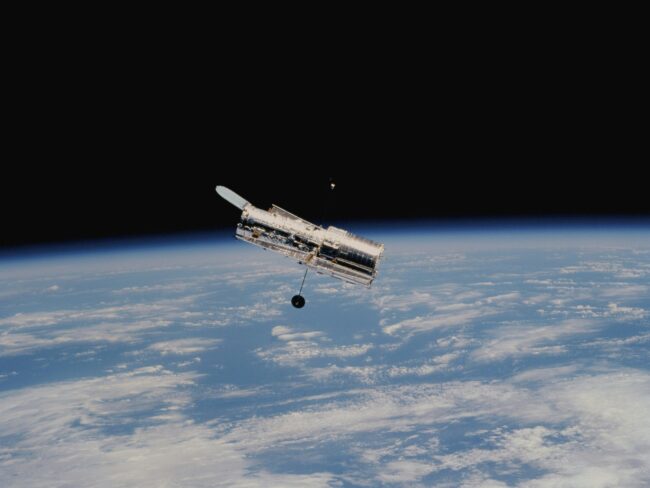
The satellite, which launched in August 2024, carries a cutting-edge microwave radiometer developed by AAC Clyde Space’s subsidiary AAC Omnisys in Gothenburg, alongside the spacecraft’s core systems manufactured at the company’s facilities in Uppsala and Glasgow. Despite being only the size of a washing machine, the 125-kilogram satellite is delivering atmospheric data quality that matches larger, traditional weather missions.
“We are proud to see our advanced technology helping shape the future of weather forecasting. This recognition from ESA reinforces our position at the forefront of space-based weather intelligence,” said Luis Gomes, CEO of AAC Clyde Space.
Operational Success
ECMWF’s David Duncan, who works on microwave sounder data assimilation, confirmed the satellite’s robust performance. “We observe improved wind forecasts at high latitudes that persist through forecast day three,” according to ECMWF analysis published in August 2025. The data showed normalised improvements in wind forecasting accuracy, with benefits extending to humidity, temperature, and geopotential fields.
The satellite operates across three key atmospheric measurement bands, including a pioneering 325 GHz frequency never before used for operational weather forecasting. This “sub-millimetre” band provides enhanced sensitivity to ice clouds and represents a breakthrough in atmospheric monitoring capabilities.
Scottish Innovation Impact
The success has significant implications for Scotland’s growing space sector, which employs more than 8,500 people and generated £298 million in combined income for 228 space organisations in 2021/22. The Arctic Weather Satellite demonstrates Scottish capabilities in the rapidly expanding small satellite market.
“The Arctic Weather Satellite is a flagship project for AAC Clyde Space and for the Nordic region as a whole. It aims to dramatically improve weather forecasting in the Arctic region and greatly improve our understanding of climate change,” Gomes stated when the satellite was under development.
Future Constellation
The satellite serves as a prototype for the proposed EPS-Sterna constellation, a network of weather satellites planned by EUMETSAT. In July 2025, EUMETSAT member states approved moving forward with the €1 billion programme, which would deploy 20 similar satellites to provide near-global coverage every five hours starting in 2029.
The economic case for expansion is compelling. Studies estimate EPS-Sterna would generate more than €30 billion in value for Europe’s economy over 14 years, delivering a benefit-cost ratio of up to 51:1.
New Space Approach
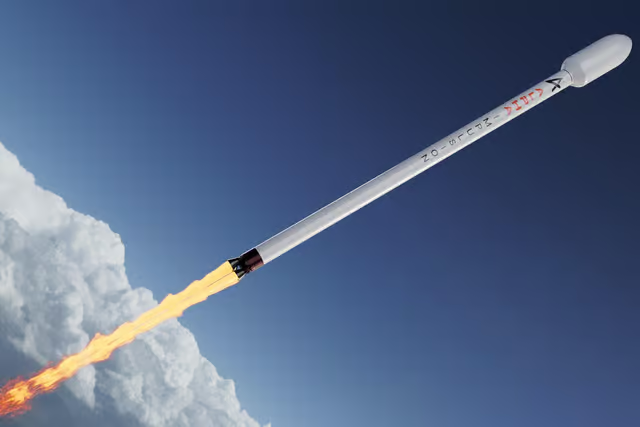
The Arctic Weather Satellite exemplifies the “New Space” approach, having been conceived, built, and launched within just three years and on a constrained budget. This rapid development timeline contrasts sharply with traditional large satellite programmes that typically require decades.
“While we were confident that our New Space approach to developing and building the satellite would succeed, its performance in orbit has far exceeded our expectations,” said Ville Kangas, ESA’s Arctic Weather Project Manager.
The satellite’s operational data has already shown measurable benefits for short-term forecasting, particularly in Arctic regions where weather conditions can change rapidly. ECMWF analysis demonstrates forecast improvements extending globally, with enhanced accuracy for severe weather prediction across Europe.
The project represents a significant validation of Scottish space engineering capabilities and positions Glasgow-based AAC Clyde Space at the forefront of the next generation of weather monitoring technology that could transform forecast accuracy across Europe and beyond.