


Scotland’s next wave of innovation may depend less on generating ideas than on getting the right industrial partners involved earlier enough to shape them.
Converge is making that case as it prepares to welcome a record 2026 cohort of more than 120 academic entrepreneurs, but the clearest example in this story is Orbital Marine Power. The Orkney-based tidal energy company’s backing of Converge’s Blue Economy Award gives the argument a sharper technology edge: if Scotland wants more university research to become commercially relevant businesses, it needs more founders exposed early to companies already solving hard engineering problems at scale.
That is why Orbital’s involvement matters beyond sponsorship. The company is not simply attaching its name to a prize; it is bringing sector expertise, commercial perspective and practical mentorship into a part of the pipeline where ideas are still being tested. In sectors such as marine energy, that can make the difference between a technically interesting concept and one that is built around real operational demand.
Converge says stronger early-stage collaboration between academia and industry will be critical if university-led innovation is to be shaped by market need and equipped to scale successfully.
Adam Kosterka, Executive Director of Converge, said: “Scotland’s universities continue to produce world-class research, exceptional talent and hugely promising early-stage ventures.
“The opportunity now is to ensure industry is engaging with those innovations earlier, helping shape ideas, challenge assumptions and guide development towards real market need.
“By bringing industry closer to researchers and university-born businesses at an earlier stage, we can help create stronger ventures, accelerate commercialisation and maximise the real-world impact of Scottish innovation.”
The message lands with particular force in the blue economy, where commercialisation is often constrained not by imagination but by the complexity of deployment, infrastructure and route-to-market. Orbital has spent years developing floating tidal energy technology in Orkney, and its presence here signals a growing recognition that established technology businesses can play a bigger role in helping Scotland’s next generation of start-ups mature faster and more usefully.
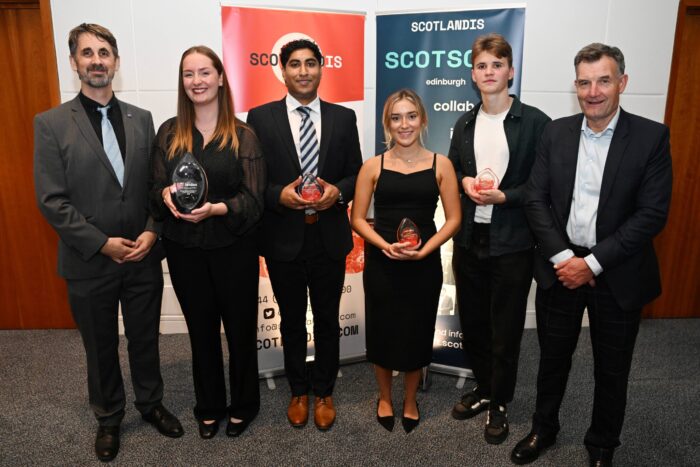
One example is Converge’s new partnership with Orbital, which is supporting the organisation’s Blue Economy Award.
The prize recognises emerging university-led ventures developing innovations across marine, renewable and blue economy sectors, with Orbital’s backing adding sector expertise and mentorship alongside financial support.
Headquartered in Orkney, the technology developer’s involvement reflects a wider view that engaging with innovation earlier can help shape start-up businesses with stronger long-term commercial and practical relevance.
Andrew Scott, Orbital’s CEO, said: “Innovation is central to our business, so supporting the next generation of university-led ventures is a natural fit for us.
“Through our partnership with Converge, we want to help identify and support emerging businesses with strong potential across the blue economy and wider energy ecosystem.
“Equally importantly, it gives us the opportunity to engage directly with early-stage innovators, share practical insights from our own journey and help shape ideas that may have significant future application across marine and energy sectors.”
That framing also helps place Orbital within a broader Scottish innovation story. Converge’s latest intake suggests the supply of university-born ideas is healthy, but supply alone does not guarantee stronger companies. What matters is whether those ventures are formed with enough early input from operators, customers and sector specialists to avoid becoming promising technologies in search of a market.
Helen Cross, Director of Investment and Research at the Scottish Funding Council, said: “The Scottish Funding Council has funded Converge over the whole 15 years of its existence and it’s always exciting to see the latest cohort of Converge academic entrepreneurs.
“This year’s record level of applications demonstrates the depth of entrepreneurial talent emerging from Scotland’s universities. By helping academic entrepreneurs connect earlier with industry, investors and commercial partners, Converge is playing an important role in strengthening Scotland’s innovation pipeline and turning world-class research into businesses with real-world impact.”
Recent initiatives including Converge’s new Space Challenge suggest the organisation is putting more emphasis on strategically important sectors where Scotland already has the ingredients for competitive advantage. But in this case, Orbital offers the strongest illustration of the model Converge wants to build: one where major technology companies do not wait until a start-up is fully formed before engaging, but step in early enough to influence what gets built and why.
Kosterka added: “Scotland has many of the ingredients required to lead globally in innovation-led growth.
“What will determine our success is how effectively we connect research, entrepreneurship, industry and investment around the opportunities of the future.
“Our role is not only to support the creation of new ventures, but to help build the ecosystem around them that gives them the best chance of long-term success.”