


Published: 14 May 2026
A Scottish-led consortium will train the next generation of UK nuclear scientists and engineers after the University of Glasgow, Heriot-Watt University and the University of Edinburgh secured a place in the UK Government’s £65.6m Doctoral Focal Awards programme — putting central-belt institutions at the heart of the country’s nuclear skills strategy.
The Skills Centre for Advancing Nuclear Systems, known as SCANS, is one of seven doctoral training centres backed by the Department for Energy Security and Net Zero and the Ministry of Defence. The awards, announced on 13 March 2026, are delivered by UK Research and Innovation (UKRI) and match-funded by industry.
Who’s involved — and what they’ll do
SCANS will be led by the University of Glasgow, with Heriot-Watt and the University of Edinburgh as primary partners, alongside 25 nuclear-sector partners spanning academia, industry and government.
Over the next seven years, more than 120 supervisors across the partner institutions will train over 60 doctoral researchers across four cohorts. Students will work across the full nuclear lifecycle — from advanced fuel and reactor development through to decommissioning, waste management and environmental stewardship.
The centre will operate as two interconnected hubs in Glasgow and Edinburgh, giving students access to a heavyweight set of research facilities:
- SUERC (Scottish Universities Environmental Research Centre) radioisotope laboratories
- Heriot-Watt’s National Robotarium and Lyell Centre
- University of Edinburgh’s National Nuclear User Facility
- University of Glasgow’s wet-chemistry, nuclear materials and specialist physics laboratories
Recruitment opens later in 2026, with the first cohort starting in the 2026/27 academic year.
Why it matters for Scotland’s tech ecosystem
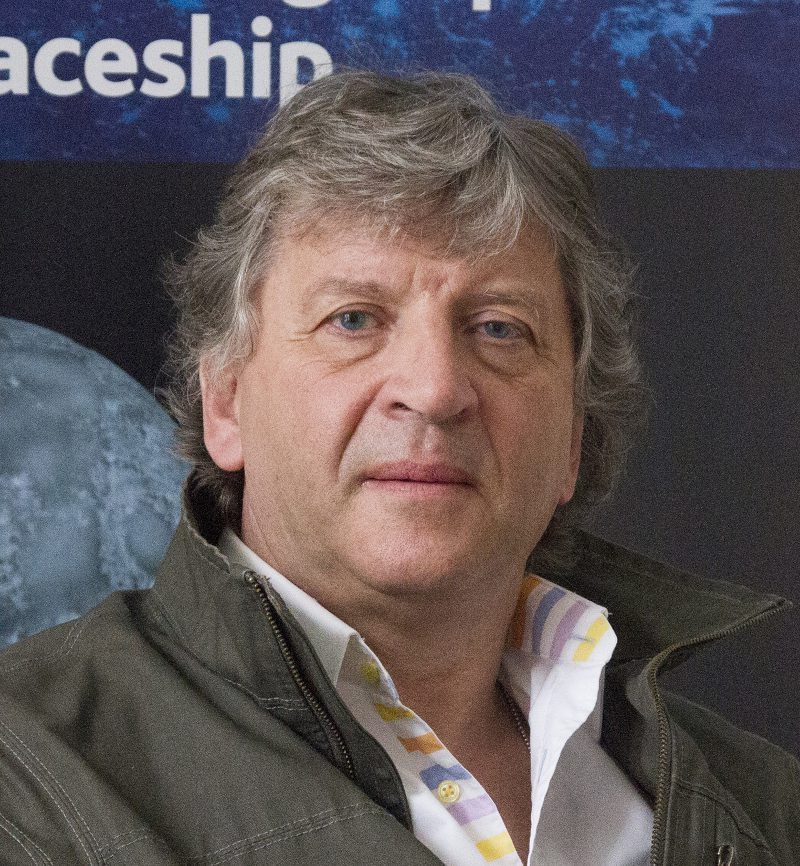
Assistant Professor Stephen Mansell, Heriot-Watt’s lead on SCANS, framed the centre as a long-horizon contribution to UK decarbonisation.
“This is a really exciting opportunity to train the next generation of innovators in the UK’s nuclear sector,” Mansell said. “It will play an important role in decarbonisation throughout the coming decades, so I am delighted to work with my colleagues across many different fields in order to deliver new skills and careers for our students.”
Heriot-Watt said SCANS builds on the university’s existing strengths in energy systems, materials science and applied engineering — reinforcing a wider Scottish positioning around energy-transition research that already underpins the Net Zero Technology Centre in Aberdeen and the SUERC consortium in East Kilbride.
A national push, with Scotland in a leading role
The wider £65.6m programme is part of the UK’s Nuclear Skills Plan, which aims to quadruple the number of nuclear fission doctoral students to address a sector-wide skills shortage and an ageing workforce. Across all seven centres, more than 500 doctoral students will be supported between 2026/27 and 2033/34.
Other centres in the programme include the DRIVERS consortium led by Imperial College London, working with Bangor, Bristol, Manchester and Swansea universities. But SCANS represents the only programme led from Scotland — meaning the central belt becomes a primary national hub for nuclear doctoral training over the coming decade.
Professor Charlotte Deane, Executive Chair at UKRI’s Engineering and Physical Sciences Research Council, said the awards are designed to address an immediate strategic need.
“The UK’s nuclear sector is central to our national security, clean energy ambitions and economic future,” Deane said. “Meeting those challenges demands a new generation of researchers and innovators with the technical expertise to make a real difference.
“UKRI doctoral focal awards are a proven way to develop that talent. They bring together academic excellence, industry partnerships and cohort-based learning to give doctoral students the skills and experience to make an immediate impact in the nuclear workforce.”
The longer view
For Scotland, SCANS is more than a research programme. It anchors three of the country’s largest research universities into the UK’s long-term civil and defence nuclear strategy — at a moment when the wider Scottish tech and energy ecosystem is growing at almost double the UK average.
It also extends the central belt’s positioning as a destination for high-end energy and engineering research, alongside related clusters in subsea and offshore at Heriot-Watt’s Lyell Centre and Aberdeen’s Net Zero Technology Centre.
Whether the programme delivers on its workforce ambitions will depend in part on industry uptake — but with 25 named partners signed up at launch, the early signals are that SCANS will not be short of placement opportunities or co-funded research projects.