

Scientists at the University of Leicester have developed a pioneering technique that could dramatically speed up the development of phage therapies — a potential lifeline in the global fight against antimicrobial resistance (AMR), and one with direct relevance to Scotland’s own healthcare ambitions.
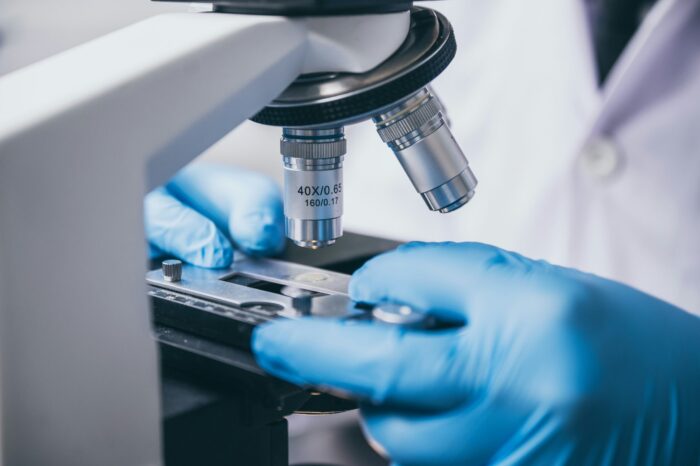
The breakthrough, published in the Microbiology Society journal, offers a rapid, low-cost method to sequence and characterise bacteriophage genomes — viruses that infect and destroy harmful bacteria — directly from individual plaques on an agar plate. Until now, that process has been slow, expensive, and dependent on large quantities of purified viral DNA, leaving many potentially useful phages unanalysed and absent from therapeutic libraries.
What Are Bacteriophages?
Phage therapy uses bacteriophages — viruses found widely in nature — to target and kill specific strains of bacteria. Unlike broad-spectrum antibiotics, which can wipe out beneficial bacteria alongside harmful ones, phages are highly precise: they home in on particular bacterial strains, leaving the wider microbiome intact. The challenge has never been finding phages — they exist in huge numbers in soil, water, and the human body — but identifying and validating the right ones quickly enough to be therapeutically useful.
The Breakthrough
The Leicester team, based at the university’s Becky Mayer Centre for Phage Research, has now solved a key bottleneck. By combining minimal DNA input with amplification via Oxford Nanopore sequencing, they can analyse phage genomes directly from plaques with very little raw material.
Dr Andrew Millard, Co-lead of the phage centre, said: “Because the method works from very small amounts of material, it eliminates the need for large-scale phage purification and transforms the speed at which hundreds of genomes can be analysed from months, to less than a week.
“This pioneering breakthrough means that there is potential to find and understand many more bacteriophages to fight disease and scale up the quantities available and allow us to focus on the best phages.”
Professor Martha Clokie, who also co-leads the centre, added: “This is a vital step towards making phage therapy a practical reality. Antimicrobial resistance is already responsible for around five million deaths each year globally, and without new solutions this will only increase. By enabling us to rapidly identify and develop the best phages, this approach brings us much closer to delivering a new class of precision medicines.”
The Scottish Connection
The Leicester advance has particular resonance north of the border. Scotland has already been a pioneer in early-stage phage therapy — one of the first NHS-linked phage trials in the UK saw ten patients with difficult-to-treat diabetic foot infections in Edinburgh and Glasgow treated with anti-staphylococcal phages, highlighting both the promise and the current limitations of the technology. Crucially, the Scottish Health Technologies Group has formally recommended that phage therapy be considered for difficult-to-treat infections — a policy position that puts Scotland at the forefront of readiness to adopt treatments like these as they mature.
The Leicester team’s new sequencing technique directly addresses the bottleneck that held back those early Scottish trials: the inability to rapidly characterise and scale up phage candidates. With the new method cutting genome analysis time from months to days, building the large, fully characterised phage libraries needed for routine clinical use becomes a realistic near-term goal.
The Road to Clinical Use
The Leicester researchers are now deploying this technique to build large libraries of fully characterised bacteriophages, dramatically expanding the pool of drug-resistant infection candidates available for treatment. Their ultimate aim is to bring phage therapies into routine healthcare — providing precisely targeted treatments that antibiotics can no longer reliably deliver.
With Scotland already invested in phage therapy at both clinical trial and health policy levels, breakthroughs like this one from Leicester could directly accelerate the path to phage treatments becoming a standard option for Scottish NHS patients facing drug-resistant infections.
The research was published in the Microbiology Society journal. The University of Leicester’s Becky Mayer Centre for Phage Research is the UK’s only dedicated centre focused on phage therapy as an alternative to antibiotics.