


A University of Glasgow team has been awarded £4m by the Wellcome Trust to spend seven years building the first detailed map of the mechanical forces inside a living heart, using engineered spider-silk sensors and single-photon optical detection in zebrafish.
A research team led by the University of Glasgow has secured a £4m award from the Wellcome Trust to develop an imaging platform capable of measuring the mechanical forces between individual cells inside a living, beating heart. The seven-year project, in partnership with the University of Sheffield and Imperial College London, builds on an 18-month proof-of-concept study also funded by Wellcome.
The work sits at the intersection of biophysics, computational imaging and developmental biology. The team plans to genetically engineer zebrafish so that the proteins which act as molecular “glue” between heart cells carry a microscopic tension sensor made of elastic spider silk. That sensor stretches like a spring under load, and the strength of the stretch can be read out by measuring the timing of individual photons of light with billionth-of-a-second accuracy — even while the heart is beating several times per second.
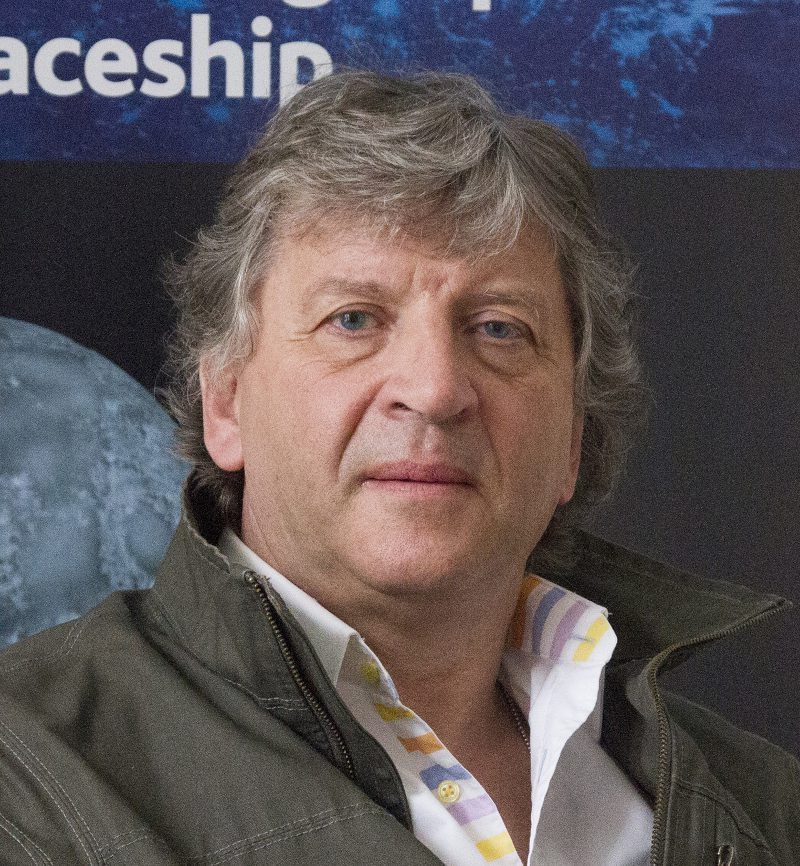
Professor Jonathan Taylor, Professor of Biophysics at the University of Glasgow’s School of Physics and Astronomy and the project’s principal investigator, said: “The heart is an extraordinarily complex biological machine, and we still don’t fully understand the forces that govern its development and growth. However, we do know that these forces play a vital role in shaping how the heart forms. Disruptions to these forces are also thought to be among the earliest stages of heart disease. By developing new methods to visualise and map out this force landscape, we hope to unlock new understanding of heart disease and how to treat it. I’m grateful to the Wellcome Trust for this support, which will bring together world-leading expertise from our three universities to tackle this ambitious challenge, and allow us to develop new force-imaging tools that will be shared with researchers worldwide.”
The Glasgow group will work with Professor Julien Vermot at Imperial College London and Dr Emily Noël, a senior lecturer at the University of Sheffield. The combined expertise covers the imaging hardware, the genetics of the zebrafish model and the developmental biology of the heart. Over seven years the team intends to produce a comprehensive map of mechanical forces across heart development, intended as a public resource for cardiovascular researchers worldwide.
The £4m award is part of the Wellcome Trust’s Bioimaging Technology Development Awards, a programme funding instruments and methods that take biological imaging beyond what current techniques can resolve. Two Imperial-led projects were funded in the same round: £3.92m to Dr Amanda Foust for a real-time, large-volume voltage-imaging platform aimed at neural networks in Alzheimer’s research, and £4.62m to Professor Mengxing Tang for a 3D super-resolution ultrasound system for studying micro-circulation and metabolism in living animals. The Glasgow-led heart-force project is the third in the round.
Vermot said: “This project offers a unique opportunity to understand how mechanical forces drive heart development, while training the next generation of researchers in this exciting area of science. We are thrilled to continue this strong collaboration between our three universities.”
Zebrafish are widely used in cardiovascular research because their hearts are transparent in early life, beat in a pattern similar to mammals, and can be imaged in intact, living animals. The Glasgow approach pushes the field by combining a molecular-scale force sensor with detection electronics fast enough to track changes inside a heart that contracts several times each second.
Emily Noël said: “We are delighted by the opportunity to continue our collaborative work on understanding not only the fundamental forces that shape the heart, but also how changes in these forces contribute to onset of cardiac diseases.”
For Glasgow, the award reinforces a growing concentration of single-molecule and single-photon imaging expertise in Scotland, sitting alongside biophotonics and optics work at the universities of Edinburgh and St Andrews. The team’s stated intention to release its force-imaging tools as a shared community resource positions the project as infrastructure for a wider research base, not only a single-lab capability.