

By Anne Beau-Lyon
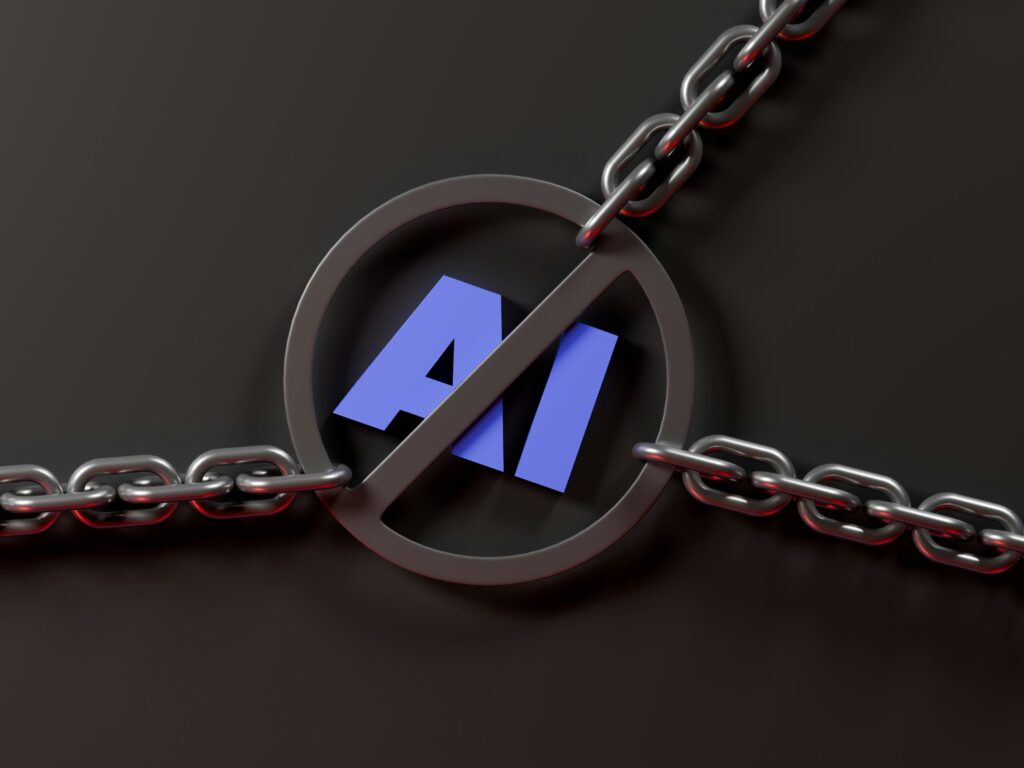
In an age of AI content moderation, deepfake disinformation and sweeping online regulation, Britain — long a bastion of free expression — is facing an uncomfortable question: is its proud free-speech heritage quietly slipping away? In this article, we explore one of the defining tensions of the digital age: whether the technology that promised to set information free is instead becoming the most powerful tool of speech control ever placed in government hands.
For generations, free speech was considered to be part of Britain’s national DNA: yes, the country of Milton, Mill, and a press that could hold power to account without fear, but you may not remember that. Now, where algorithms moderate faster than any court can adjudicate, something has changed. According to Freedom House’s latest Freedom on the Net report, the UK shockingly ranks outside the world’s top 25 for internet freedom, scoring just 76 out of 100. It trails not only the Scandinavian front-runners but newer democracies that have embraced the digital era with a lighter regulatory touch.
Leaders like Iceland, Estonia, Finland and Canada have found ways to protect citizens from genuine online harm without creating sprawling, vaguely worded legislation that ends up policing lawful speech. At the opposite extreme sit China, Russia, Iran and Myanmar, where AI-assisted surveillance tracks citizens’ every post and users are jailed for what they type. “Britain” they say, “is not yet in that company” despite much evidence to the contrary (the Free Speech Union reported that British Police arrested over thirty people per day in 2025 for social media posts. This direction of travel is causing significant unease to those awake enough to appreciate the threat that has already arrived.
That “significant unease” is largely absent from mainstream media. It gets addressed from time to time, but its swept under the carpet and we are reassured that its not a problem. But the mainstream media itself has become increasingly viewed by a sceptical public as an extension of the very establishment it once held to account. Instead this “significant unease” is to be found as the animating obsession of a new generation of independent creators found on YouTube and digital platforms. Many of these new creators are now outperforming legacy outlets on traffic and engagement by satisfying the demands of audiences actively seeking the conversations that mainstream broadcasters avoid.
The Machine That Moderates
The central technology story here is AI-powered content moderation. Platforms like Meta, YouTube and X deploy automated systems making billions of content decisions daily — far beyond any human review capacity. The problem is nuance: keyword filters routinely catch lawful speech alongside genuinely harmful content, sweeping up journalism, satire and human rights documentation in the same net. The Global Network Initiative warned in 2025 that AI moderation tools are becoming instruments through which governments quietly encode their censorship preferences into platform algorithms.
The UK’s Online Safety Act sits at the heart of this concern. Implemented by the current Labour Government, it requires platforms to suppress “potentially illegal” material — a definition critics argue is dangerously elastic. Google publicly rebuked the approach in late 2025, warning it risks undermining freedom of expression. Platform X accused UK regulators of “heavy-handed overreach,” while polling in The Telegraph found a majority of British people believe Labour will use the new laws to censor political content.
Scotland’s Controversial Law
North of the border, the Scottish Government’s Hate Crime and Public Order Act — in force since April 2024 — has added its own flashpoint. Its vague “stirring up hatred” provisions alarmed journalists, comedians and civil liberties groups from the outset. The controversy peaked within hours of the law taking effect, when Police Scotland was flooded with complaints — including one filed against then-First Minister Humza Yousaf, whose own speech championing the Act was flagged as potentially hateful under its provisions. Such was the furore that arose immediately upon introduction of the Act that Police Scotland received almost 4,000 complaints within the first few days many of which focussed on Yousaf’s infamous speech which Elon Musk himself had attacked on the same grounds as those raising the issue under the Act.
Deepfakes and the Tools Fighting Back
The threat to free speech doesn’t only come from Government or Deep State. AI-generated deepfakes are flooding the information environment, making it progressively harder to distinguish truth from fabrication. The UN’s human rights body noted in 2025 that deepfakes are being weaponised to silence women journalists and political figures — and when citizens can no longer trust what they see and hear, informed democratic debate shrinks accordingly.
But Technology is also providing defences. End-to-end encryption, open-source AI models beyond any single government’s control, and tools like VoiceSecure — an AI system developed at the University of Maryland that shields voice data from automated surveillance — represent a growing counter-movement not only holding back the tide but pushing back against it.
A Heritage Worth Defending
Britain built a global reputation on the idea that you could think freely, speak boldly and challenge power without fear. But law by law, and algorithm by algorithm, that space is narrowing. When people self-censor because they are uncertain of the legal or algorithmic consequences, freedom of speech is already diminished — regardless of what politicians might claim. The question is not whether anyone in government is paying attention to the league table, it is whether or not advocates of freedom of speech can continue to hold such forces at bay. The current US Administration has slowed the suffocation of this precious freedom but the battle is far from won.