


Engineers from Edinburgh’s National Robotarium and Brazil’s Senai Cimatec have developed a groundbreaking underwater robot that could fundamentally transform how the global offshore energy industry inspects and maintains critical subsea infrastructure worth hundreds of billions of dollars.
The one-metre-long flexible manipulator features an innovative soft, tentacle-like design that can conform to complex underwater structures during contact, offering significant operational advantages over conventional rigid robotic systems when working with delicate or intricate subsea equipment at depths reaching nearly 3,000 metres.
Game-Changing Technology for High-Stakes Industry
The breakthrough addresses critical challenges facing the offshore sector, where subsea pipelines and equipment must undergo regular inspection to prevent costly failures and ensure operational safety. With offshore infrastructure decommissioning costs estimated to exceed $100 billion by 2030, extending the safe operational life of existing pipelines and equipment could deliver substantial economic savings whilst reducing environmental impact.
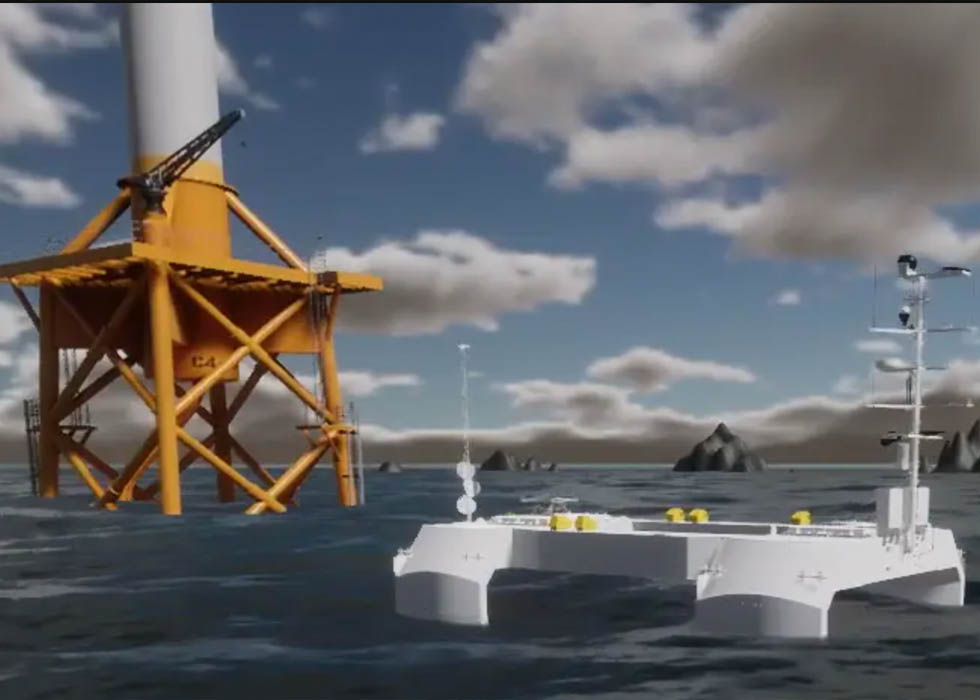
The robot combines a flexible backbone with tendon-like cables that control its movement, equipped with advanced sensors that detect position and shape underwater. This enables precise movements even in turbulent conditions, making it ideal for deployment from underwater vehicles to inspect offshore wind farms and other critical marine infrastructure.
Proven Performance Under Extreme Conditions
Tests conducted at the National Robotarium’s wave tank facility demonstrate the robot’s remarkable capabilities, positioning its tentacle-like arm with exceptional accuracy whilst maintaining stability when subjected to external forces of up to 300g. Even when intentionally disturbed, the system can correct its position and return to desired operational states within seconds—a crucial capability for functioning in unpredictable ocean environments.
Rowanne Miller, Project Manager at the National Robotarium, said: “Our team has taken this innovative underwater robot from initial concept through design and development to successful testing in real-world conditions. What makes this particularly exciting is that we’ve created a solution that doesn’t just incrementally improve existing technology – it fundamentally changes how we can approach underwater inspection tasks, opening up new possibilities for safer, more precise interaction with critical subsea infrastructure and potentially transforming how we maintain and protect our offshore assets for decades to come”.
International Collaboration Drives Innovation
The project represents a significant milestone in UK-Brazil technological cooperation, with Senai Cimatec bringing complementary expertise to the partnership.
Lucas Silva, Lead Researcher at Senai Cimatec, said: “We worked together with the National Robotarium to conceive an innovative take on underwater manipulation, opening up new use cases for the industry. This new branch of development represents an important and disruptive upgrade to our robotics development roadmap, and the seamless cooperation with The National Robotarium played a key role in this new achievement, setting new standards for future international partnerships”.
Future Deployment and Commercialisation
The soft robotic tentacle was showcased at the inaugural UK Robotics Expo, which took place at The National Robotarium on 18 September. The technology represents part of broader efforts to establish the UK as a global leader in offshore robotics and autonomous systems.
The robot’s ability to safely interact with complex underwater structures whilst maintaining operational precision positions it as a potential game-changer for an industry seeking to reduce costs, improve safety, and extend asset lifecycles.
With subsea inspection challenges intensifying as operations move into deeper waters and more extreme environments, innovations like the tentacle robot could prove essential for maintaining the integrity of critical energy infrastructure whilst supporting the global transition to renewable energy sources.