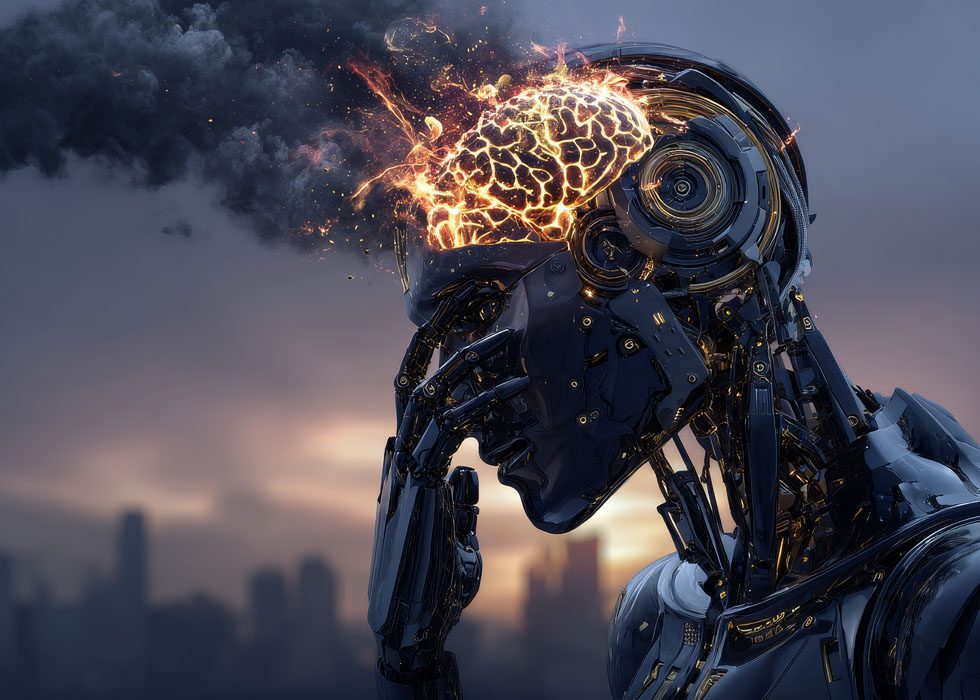


A new study from the Massachusetts Institute of Technology (MIT) claims that frequent use of AI chatbots like ChatGPT may be making people less intelligent by hampering the development of critical thinking, memory, and language skills. The research, conducted by MIT Media Lab scholars, found that participants who relied on AI to write essays showed significantly lower brain activity and underperformed in subsequent cognitive tests compared to those who used their own abilities.
“Reliance on AI Systems Can Lead to a Passive Approach”
The MIT paper warns, “Reliance on AI systems can lead to a passive approach and diminished activation of critical thinking skills when the person later performs tasks alone”. Researchers observed that the group using ChatGPT “consistently underperformed at neural, linguistic, and behavioural levels” and that only 20% could remember a quote from their own essay, with some even denying authorship when shown their work later.
Memory and Engagement Take a Hit
Lead author Nataliya Kosmyna explained: “The task was executed, and you could say that it was efficient and convenient. But as we show in the paper, you basically didn’t integrate any of it into your memory networks”.
EEG scans revealed that ChatGPT users had the lowest brain engagement, especially in regions associated with creativity, memory, and semantic processing. In contrast, those who wrote essays without AI showed the highest neural connectivity and reported greater satisfaction and ownership of their work.
Long-Term Educational Concerns
The MIT researchers caution that these findings raise “concerns about the long-term educational implications” of using AI in both schools and workplaces. Kosmyna emphasised, “Education on how we use these tools, and promoting the fact that your brain does need to develop in a more analog way, is absolutely critical. We need to have active legislation in sync and more importantly, be testing these tools before we implement them.”
Not All Tech Is Equal
Interestingly, the study found that using a search engine had relatively little negative impact compared to relying on chatbots. Essays generated with AI assistance tended to be homogenous and lacked originality, while those written independently or with search engines showed more critical engagement and diversity of thought.
As society increasingly turns to AI for convenience, MIT’s research suggests we may be sacrificing the very skills that make us human. “Developing brains are at the highest risk,” Kosmyna warned, especially as policymakers consider integrating AI tools into education at ever-younger ages.