
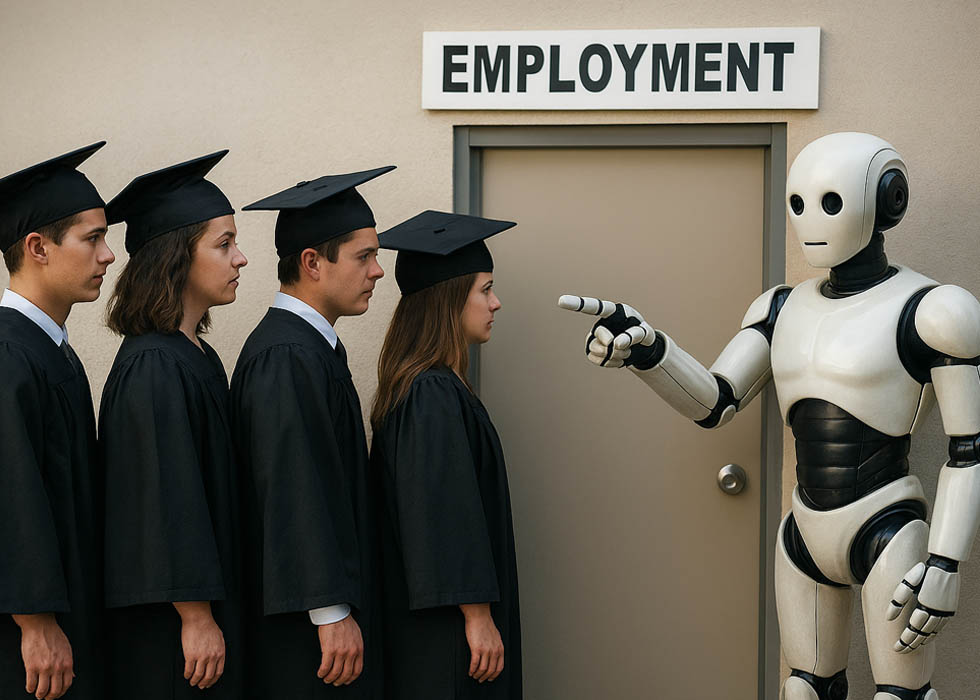


The technology sector, once a reliable pathway for graduates to transition from education to employment, has experienced a significant decline in hiring as artificial intelligence reshapes the job market.
According to data from the Institute of Student Employers, graduate recruitment decreased by 8% compared to the previous year, marking the first drop in hiring since the pandemic in 2020, which saw a 12% decline.
Despite the downturn in tech recruitment, the industry still leads in terms of available positions and demand for specific skills. Recruiters are actively seeking candidates for roles in AI, IT, and digital fields, with 46% of organizations in the UK looking for individuals equipped with these competencies.
Although there is a high demand for AI skills, they are also perceived as a significant hurdle for tech graduates entering the job market.
Many entry-level jobs are increasingly being allocated to AI systems instead of fresh graduates, as tech companies prioritise candidates with prior experience.
Junior positions are being partially supplanted by AI, as these systems handle routine tech tasks and possess fundamental digital abilities like basic coding and data analysis.
Graduates seem to be in a precarious position amid the transformation of the workforce driven by AI. As numerous companies reduce their workforce and lay off employees as part of their AI integration strategies, the hiring of junior talent is nearly stagnant as businesses seek experienced individuals.
Stephen Isherwood, ISE joint chief executive, confirmed that AI displacement was already underway. “It is a tough market for students and young people in general. There is not much churn in the labor market and young people are suffering,” he told the Financial Times.
The figures underscore a fundamental restructuring of early-career pathways in the technology industry, as employers increasingly deploy generative AI tools to automate coding, data analysis, testing, and administrative work once considered essential training grounds for graduates.
Entry-Level Vacancies Plunge 32% Since ChatGPT Launch
The decline in graduate technology roles forms part of a broader collapse in entry-level employment. Job listings for graduate positions, apprenticeships, internships and junior roles have fallen 32 percent since the November 2022 launch of ChatGPT, according to analysis by recruitment platform Adzuna.
Entry-level positions now represent just 25 percent of the UK jobs market, down from 28.9 percent in 2022. Graduate job postings specifically dropped 28.4 percent year-on-year in May 2025, reaching their lowest level since July 2020.
James Neave, head of data science at Adzuna, attributed the shift to both technological change and rising employment costs. “If you can reduce your hiring at the entry level, that’s just going to increase your efficiency and improve cost savings,” he said.
The National Insurance contribution increase for employers – rising from 13.8 percent to 15 percent in April 2025, with the threshold lowered from £9,100 to £5,000 – has compounded financial pressures on businesses considering graduate recruitment.
Neave added that the upcoming Employment Rights Bill, which removes the two-year qualifying period for unfair dismissal claims and introduces enhanced worker protections, “all adds to this list of reasons why you might not hire people”.
As the technology sector navigates this transition, the critical question facing employers, educators and policymakers is not whether AI will continue to reshape entry-level employment, but how quickly workforce development systems can adapt to prepare the next generation for roles that increasingly require human judgment, creativity and strategic thinking alongside technological fluency.