
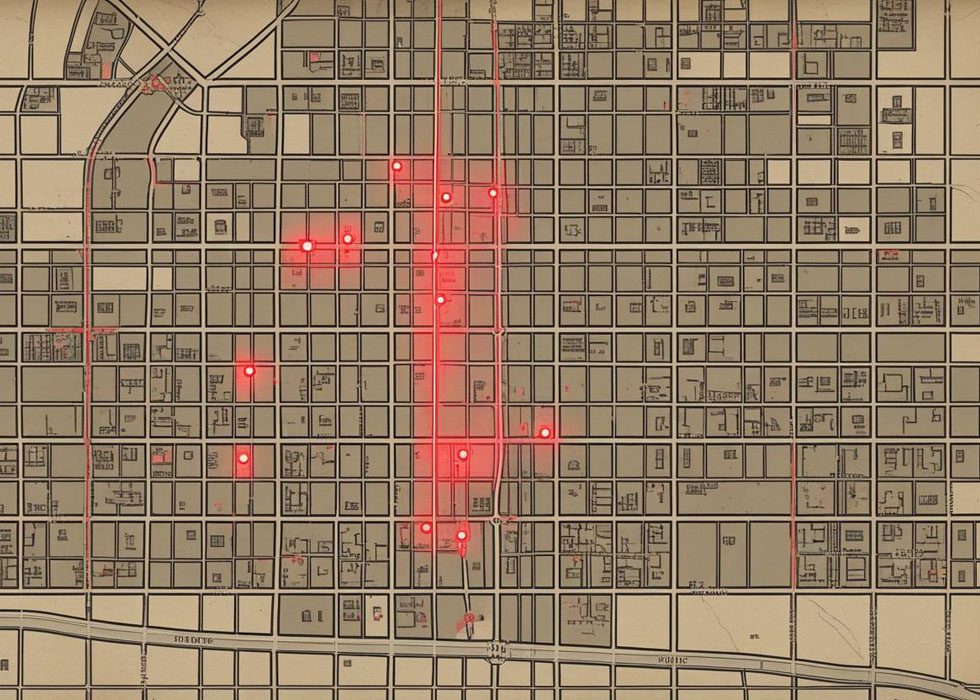


The UK Government has unveiled a pioneering AI-powered crime prevention challenge, aiming to revolutionise the way police and communities tackle crime and keep neighbourhoods safe. Announced by Science and Technology Secretary Peter Kyle, the initiative represents a major push to leverage artificial intelligence in predicting and preventing offences such as knife crime and anti-social behaviour by 2030.
The government has challenged experts to create detailed, real-time interactive crime maps capable of identifying where crime is most likely to occur, enabling targeted interventions and deployment of law enforcement resources. The interactive system will be developed through the £500million R&D Missions Accelerator Programme, with an initial £4million investment set aside for early prototype delivery by April 2026.
“Cutting-edge technology like AI can improve our lives in so many ways, including in keeping us safe, which is why we’re putting it to work for victims over vandals, the law-abiding majority over the lawbreakers,” said Peter Kyle, Science and Technology Secretary. “Our police officers are at their best when they join up to prevent crime rather than react to it, and R&D can deliver crucial tools for them to stay one step ahead of potential dangers to the public and property—keeping our streets safe and delivering on our Plan for Change”.
Community safety leaders have welcomed the initiative. John Hayward-Cripps, CEO of Neighbourhood Watch, said: “We welcome the announcement of this challenge which will bring together experts and practitioners at the cutting edge of crime, data and technology, to create an operational mapping system which we hope will enable people to feel safer and more secure in their homes and local neighbourhoods. The map will pool a wealth of valuable crime data and enable law enforcement to target their resources more effectively at a local level and help prevent further victims of crime. As an organisation that strives to build a society where neighbours are more connected, safer, and active in their communities, we welcome this laser focus on harnessing data and tech to prevent crime at the local level”.
Patrick Green, CEO of The Ben Kinsella Trust, praised the government’s “forward-thinking approach, which focuses on providing police with preventative tools to proactively intervene,” adding, “By reaching young people early and educating them on the dangers and consequences of knife crime, we empower them to make safer choices. This new initiative provides a powerful technological extension of that ethos, it demonstrates that the government recognises the immense value of prevention and is investing in innovative solutions to support our police officers in their vital work of keeping the public safe”.
Rebecca Bryant, CEO of Resolve, described the announcement as “a landmark moment for innovation in community safety,” and Matthew Evans, Director of Markets and COO at techUK, said the programme is “a forward thinking step toward building safer, stronger communities. By harnessing cutting-edge AI alongside robust data sharing between police, councils, and social services, this initiative showcases the true potential of interoperability… helping to prevent harm before it occurs and better protect the public”.
While the ambition is high, government officials stress that the deployment of AI must adhere to ethical standards and prioritise fairness, to avoid unintended risks such as profiling. As Tracey Burley, Chief Executive of St Giles, noted, technological solutions “must go hand in hand with proven measures such as early intervention for those at risk, and tackling the root causes – poverty, inequality and lack of opportunity”.
The crime mapping challenge is central to the government’s broader “Safer Streets Mission,” which aims to halve knife crime and violence against women and girls within a decade and ensure every community in England and Wales has access to neighbourhood policing backed by the latest technology.